
The unglamorous key to unlocking HVAC innovation
Unfortunately, companies in this sector often confront one particularly frustrating hurdle: the value stack gets ripped up between the entity that owns the building, owns the HVAC plant (e.g. chillers, heat pumps), and pays the heating and cooling bills.
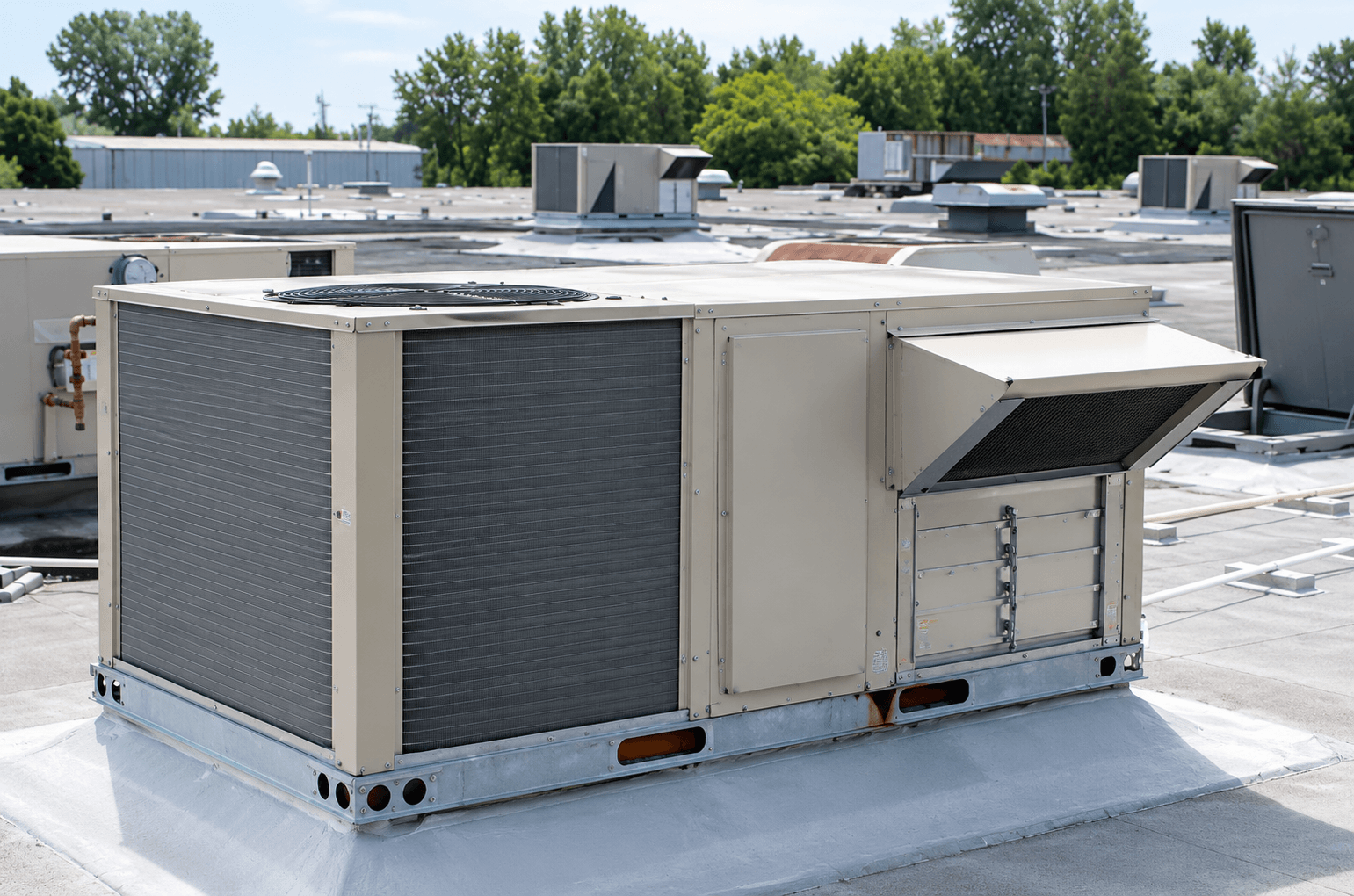

I’ve recently done a lot of work with and research into technologies making Heating, Ventilation, and Air Conditioning (HVAC) systems more efficient, sustainable, and resilient. To give a few examples, this includes things like innovations in thermal energy storage, nanoparticle additives for heat transfer fluids, and passive daytime radiative cooling.
Many of these technologies, unsurprisingly, are looking to deploy into commercial buildings. After all, there are upwards of 12 million commercial buildings in the EU alone, which are all subject to high electricity and gas prices, tightening sustainability and energy performance standards under the EPBD and, constraints on grid and cooling capacity.
Unfortunately, companies in this sector often confront one particularly frustrating hurdle: the value stack gets ripped up between the entity that owns the building, owns the HVAC plant (e.g. chillers, heat pumps), and pays the heating and cooling bills.
Let me give an example in a thermal energy storage context. If a commercial building is switching from a gas boiler to a heat pump, installing thermal energy storage at the same time can create value in several ways (this list is not fully exhaustive):
- Allowing a reduction in the size of the heat pump, leading to a capex saving
- Decreasing the peak grid capacity required to make the switch, sidestepping potential charges from the grid operator to make extra capacity available
- Generating savings on electricity costs through load shifting
- Unlocking greater utilisation of on-site solar (where applicable)
- Enabling the building / company to meet relevant sustainability targets
- Reducing maintenance requirements on the heat pump by allowing it to run at a steady state rather than frequent on/off cycling
When viewed altogether, it’s a no-brainer to put in storage. However, when you look at it from the different perspectives of the building owner, the HVAC plant owner and the bill payer, things become more complicated, as the value propositions are split (as outlined in the table below), and may no longer appear sufficiently compelling. This is a particularly significant challenge for early-stage technologies that have not yet reached full cost-down and often need to give away much of their margin (or even sell at a loss) to provide an attractive payback.
| Value to the building owner | Value to the HVAC plant owner | Value to the bill payer |
|---|---|---|
| 2 – Decreasing peak grid capacity required to make switch | 1 – Allowing a reduction in the size of the heat pump | 3 – Generating savings on electricity costs through load shifting |
| 5 – Enabling the building / company to meet relevant sustainability targets | 5 – Enabling the building / company to meet relevant sustainability targets | 4 – Unlocking greater utilisation of on-site solar |
| 6 – Reducing maintenance requirements on the heat pump | 5 – Enabling the building / company to meet relevant sustainability targets |
This is not to say that there is no hope for HVAC innovation. Instead, the upshot of all this is that, often, the unglamorous key to successfully commercialising HVAC technologies is finding those companies that sit across at least two of these roles, most likely the bill player and HVAC plant owner (e.g. Sainsbury’s and David Lloyd). Desk research will only get us so far in this as, despite a few identifiable patterns (e.g. supermarkets often fit this criteria), this information is often unavailable or unclear on an individual company basis. This underscores the importance of something key to RIG’s methodology but which, in this age of booming LLMs, we increasingly undervalue – gaining insight from human-to-human conversations with the people in-the-know.